South Asian Diaspora History: A Very Brief Overview
Dr. Heena Mistry
Neev would like to acknowledge that Milton, Ontario, is on the Treaty Lands and Territory of the Mississaugas of the Credit First Nation and the traditional territory of the Huron-Wendat and Haudenosaunee peoples. 1 According to the Canadian Encyclopedia, Milton Ontario lies within treaties 3 ¾ ,14, and 19, which are part of the Upper Canada Land Surrenders, a series of agreements made during the late 19 th and early 20 th centuries before confederation that surrendered Indigenous lands to the colonial government. Treaty 3 ¾ (also known as the Brant Tract), includes a small section of Milton that borders Burlington. It was purchased by the Crown for Six Nations leader, Joseph Brant (namesake of Brantford) as thanks for their alliance with the British during the American Revolutionary War. In 1805, Mississauga chiefs and the Crown agreed to an amendment to treaty 13, a deal that was signed as Treaty 14 (and includes most of the land within Milton). Treaty 19 includes the northern part of Milton.
When thinking of the relationship between South Asian migration history to colonialism in Canada, we should recognize that similar histories of genocide, extraction, and exploitation that were enacted by British imperialism in Canada were also done in South Asia. This article explores some of South Asia’s global migration history. Neev’s members may themselves have personal or ancestral ties to the histories this article discusses. We will then look at the legacy of these histories in Canada and other parts of the world.
What is South Asian Migration History?
South Asian migration history refers to migration of people with ancestral ties to the area that scholars today refer to as South Asia. Generally speaking, South Asia includes India, Pakistan, Afghanistan, Bangladesh, Nepal, Bhutan, and Sri Lanka. “South Asia” is an analytical category, but it helps us understand a region of the world that has had ancestral ties before the modern borders existed (which happened across the latter half of the 20th century). Historical connections between these countries transcends the borders that exist today.
South Asia’s migration history includes movement between these regions as well as movement from these regions to other parts of the world that are outside of this area. South Asian migration is multidirectional, and often happens in circuits. It has historically involved more than just people leaving this region and settling elsewhere for different reasons. Historians who study the story of South Asian migration have written enough books to fill entire library shelves. But in this article, I am going to talk about South Asian migration from late antiquity (around 300 BCE) to the period of decolonization (around the 1950s).
Migration and Empire in Ancient and Medieval South Asia
We often think of migration as something modern, but migration in South Asia and other parts of the world was also common. There are many reasons why people migrated in ancient and medieval South Asia. Sometimes ancient and medieval pre-European empires brought South Asians to different parts of the world or facilitated connections between South Asia and other parts of the world. For example, the Chola empire is a Tamil empire that expanded throughout what is today Southern India, Sri Lanka, and Southeast Asia. Migration involved the expansion of settlements controlled by the Chola King as well as intermarriage with local rulers. The Mughal empire is another important South Asian empire whose presence facilitated migration in different parts of the world. The Chola empire, and Mughal Empire, and other South Asian empires also had embassies, which sent diplomats and other state representatives to European, African, and Chinese states. Many South Asian Kingdoms, for example, sent embassies to Rome.[1]
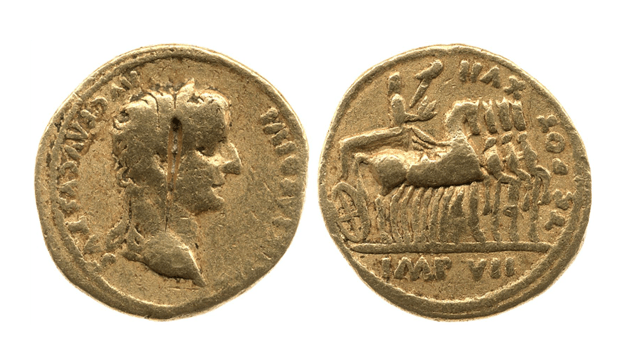
Figure 1: “Obverse & Reverse Gold Coin.” Asset number 657414001. © The Trustees of the British Museum.
Figure 1 shows Roman coins that were excavated in Tamil Nadu. They are important because they show us how far international trade extended in the ancient world, and that it included South Asia as well. There are many archaeological sites in South Asia where roman and other coins are found, which is evidence of global connections and trade.
The most prevalent form of migration from ancient and medieval South Asia was trade, both by land and by sea. Trade routes by land brought merchants along some of Asia’s longest roads. One of these is the Grand Trunk Road, which many of South Asia’s modern highways follow.[2] The Grand Trunk Road was used by Alexander the Great. It stretches from Chittagong to Calcutta to Delhi and Lahore. Another well know road was the Silk Road, which stretched from China to parts of Northern India, Pakistan, and Afghanistan to Rome. Another commonly used land-based trade route stretched from modern day Pakistan to Rome and Russia.[3] These routes were used frequently from ancient times, but slowed when the Mongol empire expanded in the 13th century, cutting off many land-based trade routes.[4] Trade Routes by sea in both the western Indian ocean and the Bay of Bengal brought South Asian merchants to Eastern Africa, the Arabian Peninsula, China, Malaysia, Indonesia, and Borneo. Under the Mughal empire’s rule, trade to the African continent and the Arabian Peninsula by sea increased[5]
South Asian merchant communities traded many different items with the rest of the world. A good deal of the trade was in luxury goods. This included expensive fabrics like silk, elaborate cotton textiles like, cashmere, Pashmina, and muslin. Merchants also traded gemstones and precious metals.
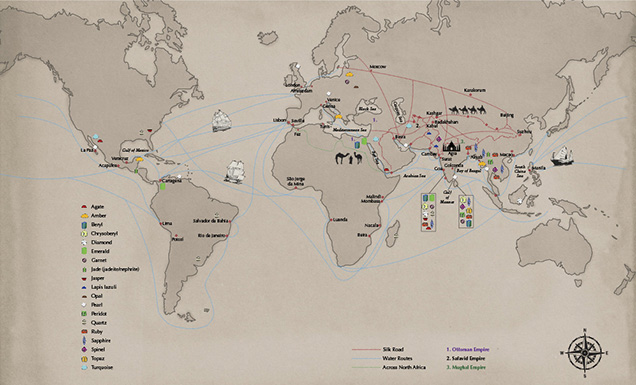
Figure 2: Dona Mary Dirlam, Chris L. Rogers, and Robert Weldon. “Gemstones in the Era of the Taj Mahal and the Mughals” Gems and Gemology Vol 55, no. 3. (Fall 2019).
The map in Figure 2 shows where different gems that are on the Taj Mahal came from. Notice how the trade routes include both land and sea routes, and how they stretch all the way to the Americas and Japan. South Asian Merchants also traded Spices like cinnamon, Black pepper, cloves, nutmeg, mace, and ginger, among others. These spices used to be quite expensive to consume outside of South Asia. Some of the most prevalent merchant communities included the Buddhist, Jain, Parsi (Zoroastrian), and Ismaili communities.
Academics in ancient and medieval South Asia migrated to share scholarship and exchange ideas with academics in other parts of the world. One of the largest and wealthiest universities between the 8th century to the 12th century AD was in Iraq (In Baghdad). Many South Asian academics travelled to the middle east and the Arabian peninsula to share learning. This is how the numbering system we use today (Arabic numerals) arrived in the West – prior to that Europe used Roman numerals. But Arabic numerals have their roots in Arabic, Sanskrit, and Tamil.[6]
Finally, Buddhist missionaries were the other major group of South Asian migrants. South Asian Buddhist missionaries travelled to China, Afghanistan, Sri Lanka, and Southeast Asia (and continued to move between these areas), spreading this particular religious tradition across Asia[7] Buddhist pilgrimages to different sites of learning and scholarship as well as South Asian Muslim undertaking the Hajj pilgrimage to Mecca were major streams of religiously motivated migration.
Migration in the Era of European Imperialism
The arrival of European imperialism to South Asia also impacted migration. The most significant form of migration that resulted from European imperialism, especially British imperialism, was labour migration. European colonization in the Caribbean, South Africa, Mauritius, and Fiji, resulted in the introduction of plantation agriculture to these parts of the world. This form of agriculture is very labour intensive and extractive. Plantation owners aimed to profit as much as possible from the land. European imperialism brought about transatlantic slavery, a system in which people were enslaved and forcibly removed from the African continent and taken to different colonies to work on plantations.
When slavery was abolished in the British empire in 1834, plantation owners wanted to continue accessing low-paid and controllable labour that was technically free on paper. This is how the indenture system came about. Indian indenture is a system by which workers in what was then British India (an area that covered and Burma, Afghanistan, Pakistan, and India) were given a contract for a set number of years to work on a plantation in another British colony. In practice however, workers were often not told the full terms of their contracts, where they were going, and what their wages were. Conditions aboard the ships that transported them from South Asia to different British colonies were unsanitary and dangerous, and workers were often subjected to violence upon arrival to their destinations.
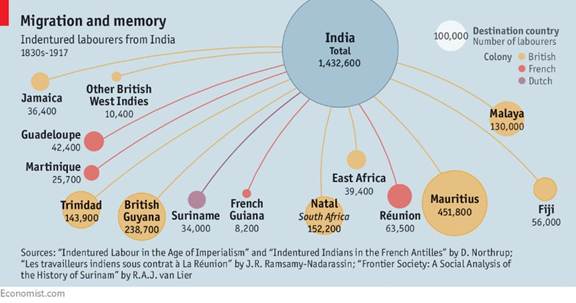
Figure 3: Susannah Savage, “The legacy of Indian migration to European colonies.” The Economist. September 2, 2017.
Figure 3 shows the number of indentured labourers from India who migrated to different British, French, and Dutch colonies from the 1830s to 1917, when Indian indenture was abolished. In addition to indenture, other forms of labour migration systems, mainly the Kangani and the Maistri systems, brought labour migration from South India to tea, rubber, and coffee plantations in Sri Lanka, Malaysia, and Burma.
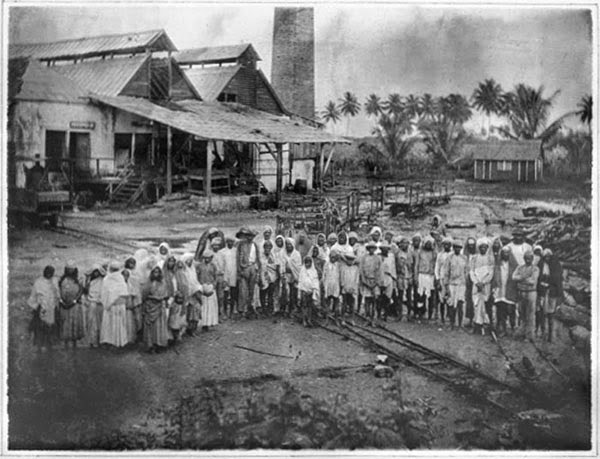
Figure 4: Photo of Indian indentured labourers in Fiji taken from Mridula Chari, “[Photos] 180 years on, India commemorates the first indentured labourers to go to Mauritius” Scroll In, November 4, 2014.
An example of migrant working women are Ayahs or Amahs. Ayahs were domestic women workers from British India who were hired in households in Britain and British colonies to cook, clean, and care for children. Sometimes images of them appear in the backgrounds of British paintings from the 19th and early 20th centuries.
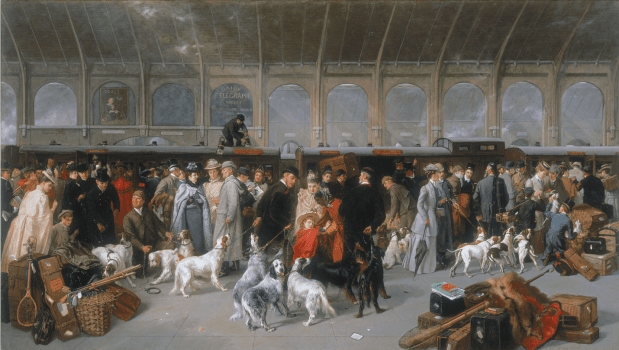
Figure 5: George Earl’s “Going North,” 1893, found in Julia Laite’s “Travelling Ayahs and Amahs and the Long History of Care Work.” History Workshop, May 11, 2023.
Figure 5 shows a painting by George Earl titled “Going North” from 1893. It depicts a busy scene in London’s King’s Cross station. However, in the very middle, dressed in red, you can see an Indian Ayah caring for a British girl.
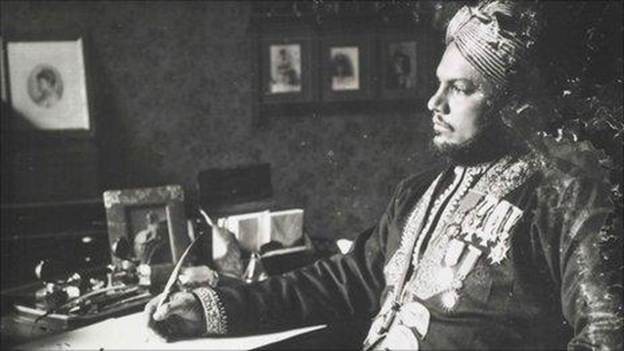
Figure 6: Photo appears in Alistair Lawson, “Queen Victoria and Abdul: Diaries reveal secrets,” BBC News, March 14, 2011.
Figure 6 features a man named Abdul Karim. Abdul Karim was born in Agra and came with his wife to England when he was 24 years old for Queen Victoria’s golden jubilee in 1887. He was a servant in the British court, but quickly became a close confidant to Queen Victoria and taught her Urdu and Hindi and introduced her to curry (which she started to eat regularly). Historian Shrabani Basu’s book tells the story of Queen Victoria and Abdul Karim’s relationship by investigating both of their diaries. Abdul Karim is an example of how South Asians moved across the empire, sometimes occupying places quite close to power.
Military Migration and Anticolonial Activists: Displacement and Restriction
Figures 7, 8, and 9 each tell a story of political and military related South Asian migration under European imperialism.
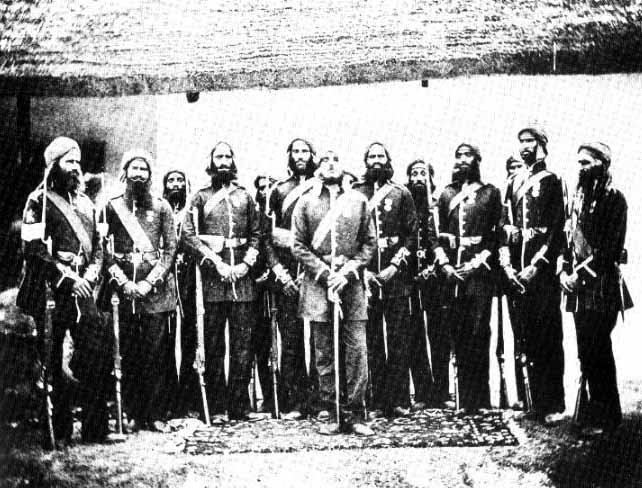
Figure 7: Men of the Loodiaah (Ludhiana) Sikh Regiment in China, Circa 1860. Wikimedia Commons.
Figure 7 features a group of Sikh soldiers in the British Indian army. South Asian solders in the British Indian army were deployed all over the world and made up a significant portion of the forces used to expand British rule in different countries. Here, they are pictured in China, fighting on the side of the British in the opium wars. The opium wars were a set of conflicts in which the British forced China to purchase opium, a powerful narcotic, in exchange for silver.
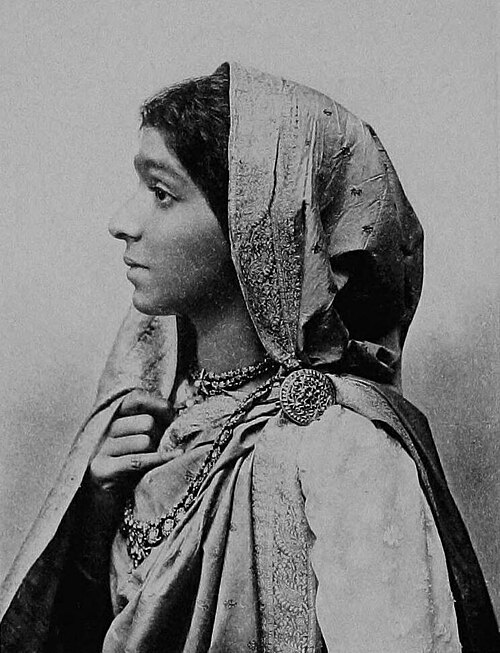
Figure 8: Sarojini Naidu, 1912. Wikimedia Commons.
Figure 8 features Sarojini Naidu, a poet, freedom fighter, and women’s rights activist from Hyderabad who earned a degree from Cambridge University and travelled throughout different British colonies advocating for an end to British rule in South Asia. She also served as a diplomat representing India and the Indian community in South Africa and advocated for the end of racial segregation of Indians in south Africa. Naidu, like MK Gandhi, Jawaharlal Nehru, and Muhammad Ali Jinnah, was an international student and a political activist who advocated for freedom from colonialism. She also spoke out against racist immigration restrictions placed on South Asians in Canada, South Africa, Australia, and New Zealand.
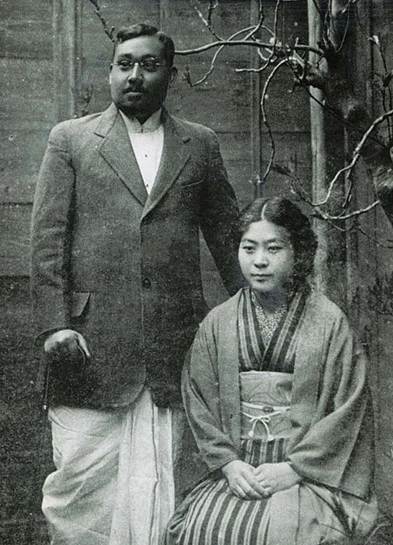
Figure 9: Rash Behari Bose (1886-1945) and his wife Bose Toshiko (1898-1925). C 1918. Wikimedia Commons.
Figure 9 features Rash Behari Bose, a revolutionary freedom fighter who faced political persecution when he was part of a plot to assassinate the Viceroy (Britain’s representative of the Queen in India). He ended up fleeing to Japan in 1915 to avoid arrest and persecution, where he lived for the rest of his life. He was sheltered by Japanese authorities and married Toshiko Soma, the daughter of a bakery owner. He’s actually the main person responsible for introducing Indian style curry to Japan. He lived out his life as an activist on the run who tried to enlist the Japanese government’s assistance in freeing India from British rule.
There are many such stories of displacement as a result of colonial rule and its aftermath. Major instances of displacement that shape South Asian diaspora communities in Canada include the partitions of India, Pakistan, Bangladesh, and Afghanistan; the Sri Lankan Civil War; the Ugandan expulsion (the event that shaped Canada’s refugee policy) and the Sikh genocide of the 1980s. All of these major displacement events have shaped Canada’s South Asian diaspora communities. There are many such stories of activists and soldiers who moved throughout the British empire both as part of it and in resistance to it.
Cultural Legacies
South Asian migration history has so many cultural legacies. I will focus on two – the first being food. South Asian diaspora are widely spread all over the globe, and while South Asian cuisine is recognized, I want to talk about cuisine of South Asian diaspora which is not well known in South Asia.The two food items pictured in Figures 10 and 11 are Bunny Chow (a South African dish which consists of curry in a loaf of bread) and Dhalpuri roti (a Caribbean dish consisting of a paper-thin roti stuffed with curry and ground lentils).
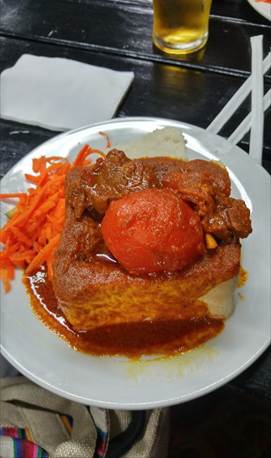
Figure 10: Author’s photo of Bunny Chow eaten in Cape Town, South Africa.
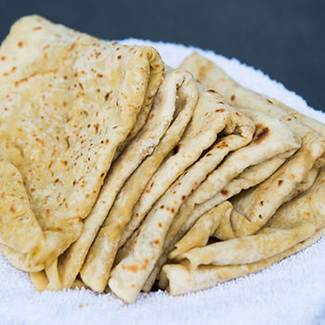
Figure 11: “Trini Dhalpuri Roti Recipe.” Foodie Nation, 2020.
Both are food items that were developed by indentured South Asian migrant labourer communities. Both adopt spices and flavours of South Asian cuisine, but pack it into a form that was easily consumable while working in a field. Most importantly, both are extremely delicious.
The second is a less well-known legacy in the music industry. Figure 12 features Farrokh Bulsara.

Figure 12: Freddie Mercury performing in New Haven, Connecticut, November 16, 1977. Wikimedia Commons.
He came from a Gujarati Parsi (Zoroastrian) family in Zanzibar (east Africa). When the Zanzibar revolution broke out, his family fled to Mumbai, and spent his childhood there. Eventually, his family moved to England, where he eventually became Freddie Mercury, the lead singer of the famous rock band, Queen. Mercury is also an important LGBTQ+ South Asian diaspora figure.
South Asian migration has a long, rich, complex history that is shaped by long-held relationships with many different parts of the world. We are lucky to live in Milton, where so many of these communities now call home.
[1] Romila Thapar, A History of India: Volume One. (Penguin Books: 1966), p. 120.
[2] Editorial Team, “What is the Grand Trunk Road?, Grand Trunk Project Initiative” May 5, 2017, URL: https://www.britishpakistanfoundation.com/grand-trunk-road-grand-trunk-project-initiative/
[3] Ibid. Roads from Taxila (Pakistan) through Afghanistan all the way to Caspian sea and black sea (basically Russia and Mediterranean). Also see Romila Thapar (1966), pp. 106-107.
[4] Romila Thapar (1966), p. 250.
[5] Romila Thapar (1966), pp. 296-297.
[6] Raffaele Danna, “The spread of Hindu-Arabic numerals in the tradition of European practical mathematics,” Economic History Society, July 11, 2019, URL: https://ehs.org.uk/the-spread-of-hindu-arabic-numerals-in-the-tradition-of-european-practical-mathematics/#:~:text=Arabic%20numbers%2C%20or%20more%20precisely,Mediterranean%20around%20the%20eighth%20century.
[7] Romila Thapar (1966), pp. 120 and 163.
 Neev: The Arts & Cultural Roots
_Sikh_Regiment_in_China,_Circa_1860..jpg)


